

EZO and Radius partner to expand EV charging access across Ireland and Scotland
EZO, Ireland’s largest private EV charging network, has announced a new integration with Radius, one of Europe’s leading fleet and fuel card providers. The partnership connects Radius customers to EZO’s growing public charging network across Ireland and Scotland, making it easier for businesses and fleet drivers to access reliable EV charging through a platform they already use.
Expanding access to public EV charging
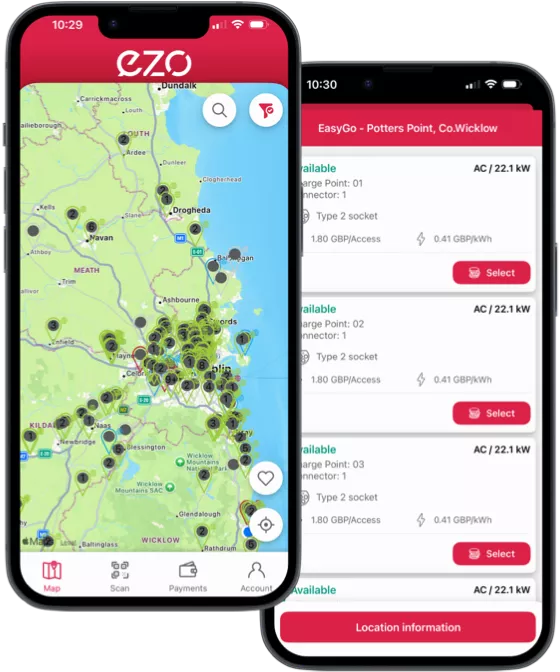
Radius operates one of the largest fuel card networks across Ireland and Scotland. Through this new integration, Radius customers can now access EZO’s network of more than 3,500 public AC and DC charge points across both countries.
The integration is now live and allows Radius customers to charge their vehicles on the EZO network using the Radius app or their existing RFID fuel card. No additional accounts or apps are required.
For fleet operators and businesses transitioning to electric vehicles, this simplifies the charging experience by allowing EV charging and traditional fuel payments to be managed through a single system.
Supporting fleet electrification

As more businesses transition their fleets to electric vehicles, easy access to public charging and simple payment solutions are becoming increasingly important.
By combining EZO’s charging infrastructure with Radius’ payment platform, fleet managers can now manage both EV charging and fuel payments through one familiar system. This reduces operational complexity and helps organisations plan the transition to electric vehicles with greater confidence.
Radius customers can use the Radius One card to access both EV charging and traditional fuelling. The card provides access to a network of more than 36,000 EV charge points alongside over 4,600 fuel stations across Europe.
This all in one solution allows drivers and fleet operators to manage multiple vehicle types through a single card and account, helping businesses operate more efficiently as their fleets evolve.
Commenting on the integration, EZO CEO Ollie Chatten said:
“Fleet operators need charging solutions that are seamless and easy to manage. Our integration with Radius delivers exactly that. By connecting our networks, we’re helping businesses across Ireland and Scotland make the transition to electric fleets with confidence.”
Matthew Kirby, EV Managing Director at Radius, added:
“We’re excited to welcome EZO into our network. This expansion strengthens EV charging coverage across Ireland and now Scotland, making it easier for drivers to access reliable charging where they need it most. With Radius One, businesses benefit from one card for both fuel and EV charging, removing the need for multiple cards and accounts while simplifying day to day management as more vehicles transition to electric.”
The partnership represents another step in expanding accessible EV charging infrastructure across Ireland and Scotland. As the number of electric vehicles continues to grow, collaborations between charging networks and mobility providers will play an important role in supporting businesses and drivers through the transition to cleaner transport.
By opening its network to Radius customers, EZO is helping make EV charging more accessible, reliable and convenient for fleets and businesses operating across both countries.
About EZO
EZO (formerly EasyGo) operates over 5,900 electric vehicle chargers across more than 2,100 locations in the UK and Ireland. Founded in 2018 and headquartered in Maynooth, Ireland, the company provides reliable EV charging solutions to more than 110,000 drivers. EZO works with partners including ESB and Ionity to improve network accessibility and interoperability across its charging infrastructure.
About Radius
Radius is a global provider of mobility and connectivity solutions for businesses. The company operates one of Europe’s largest fuel card networks and provides fleet management, telematics and EV charging solutions to businesses across multiple markets. Radius supports organisations as they transition towards cleaner and more efficient transport operations.